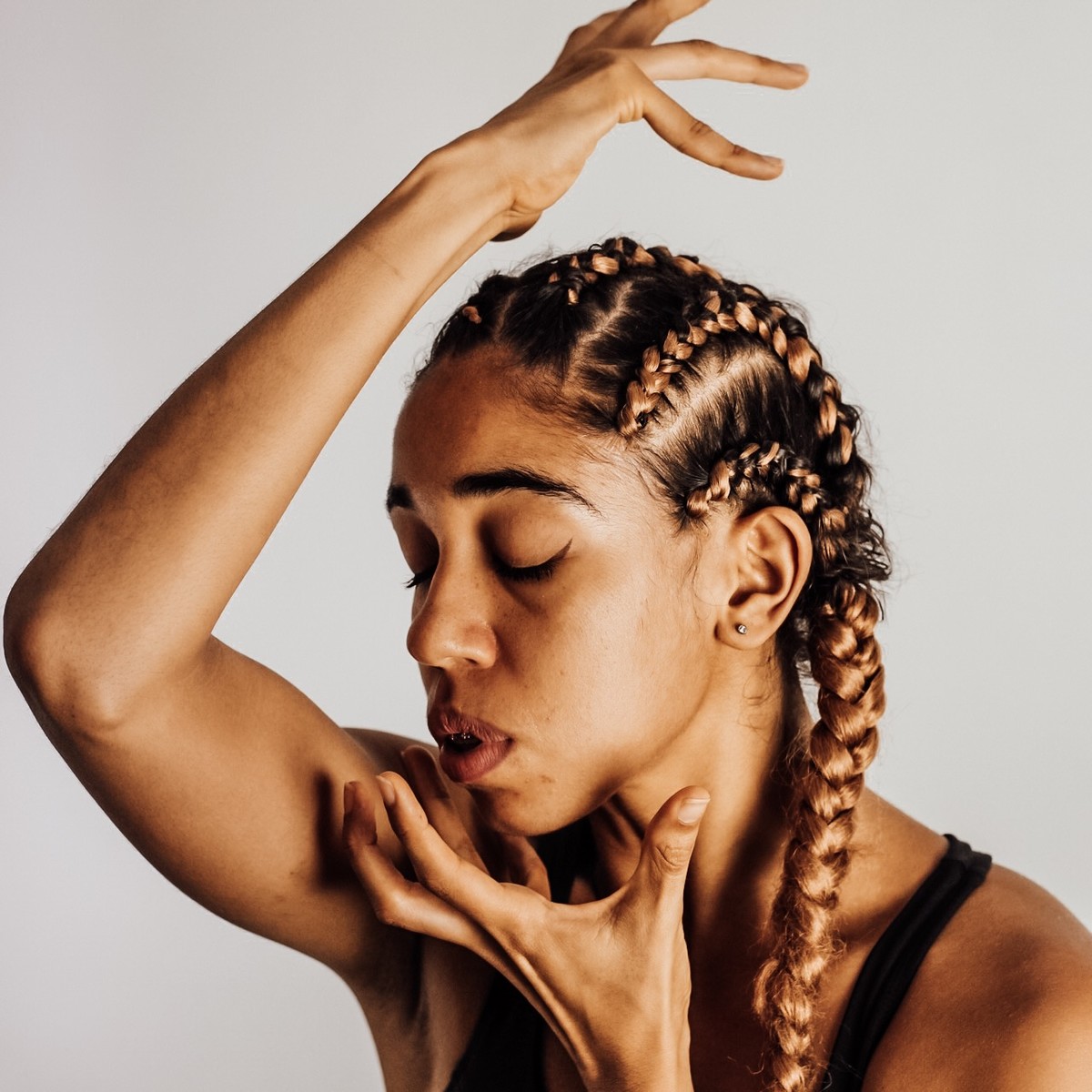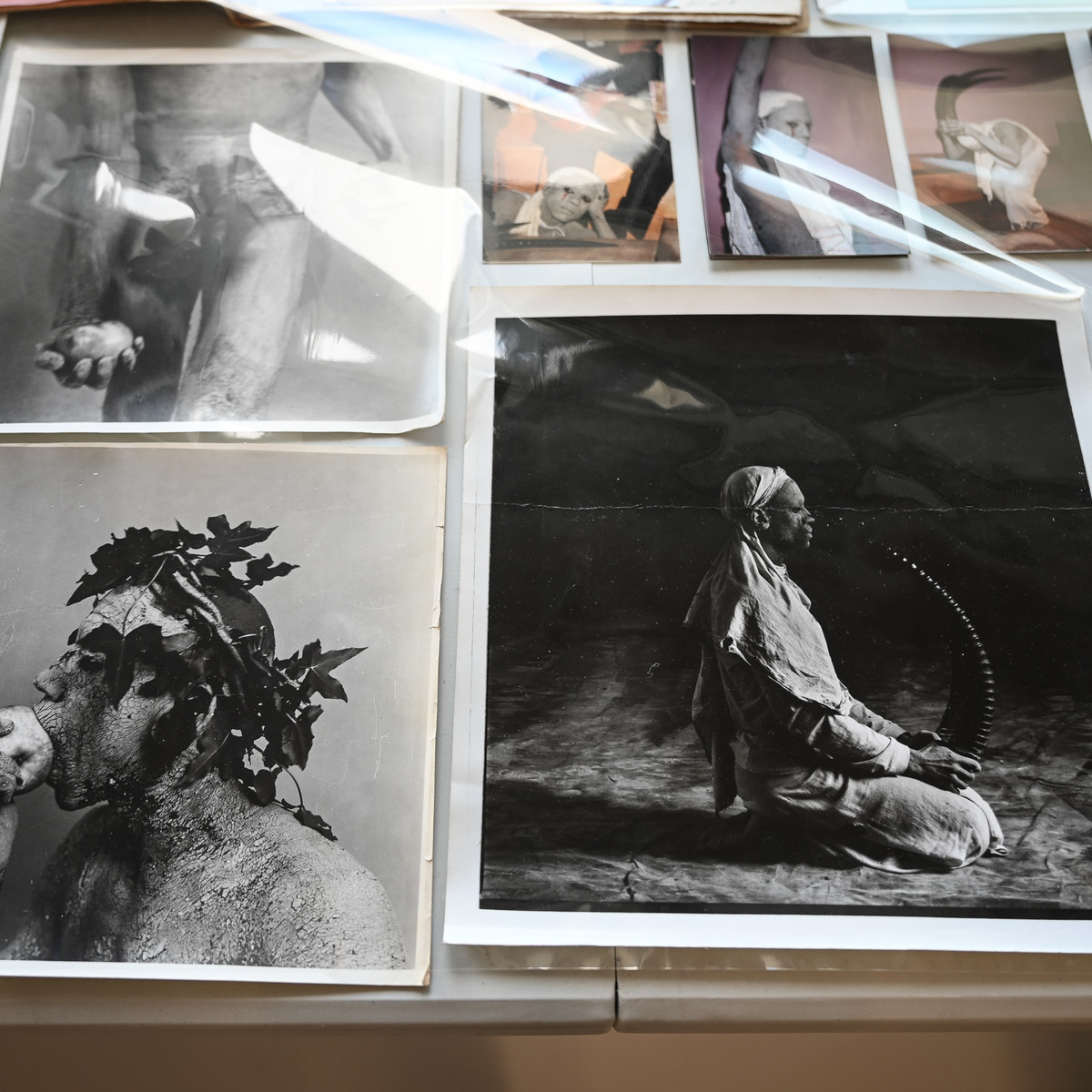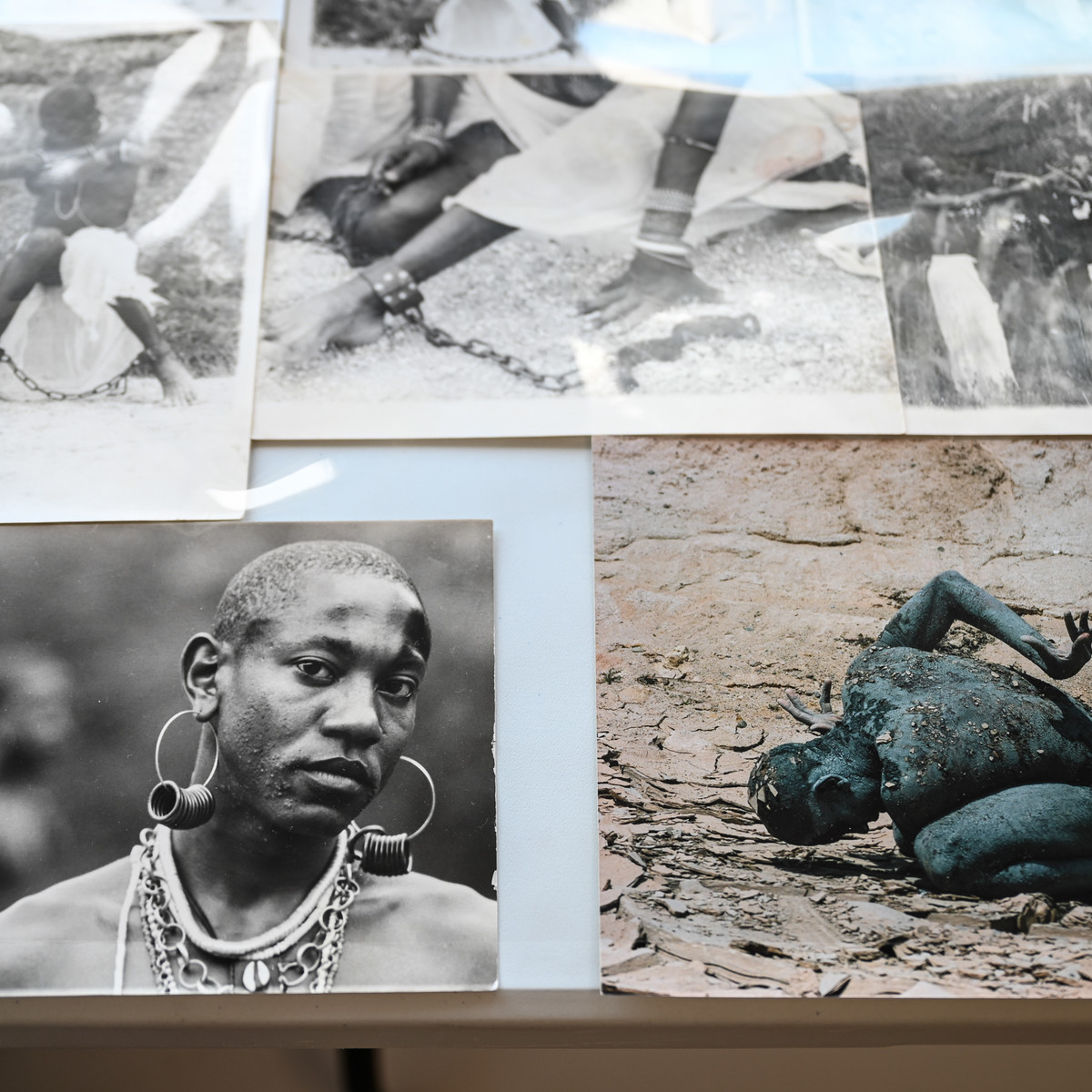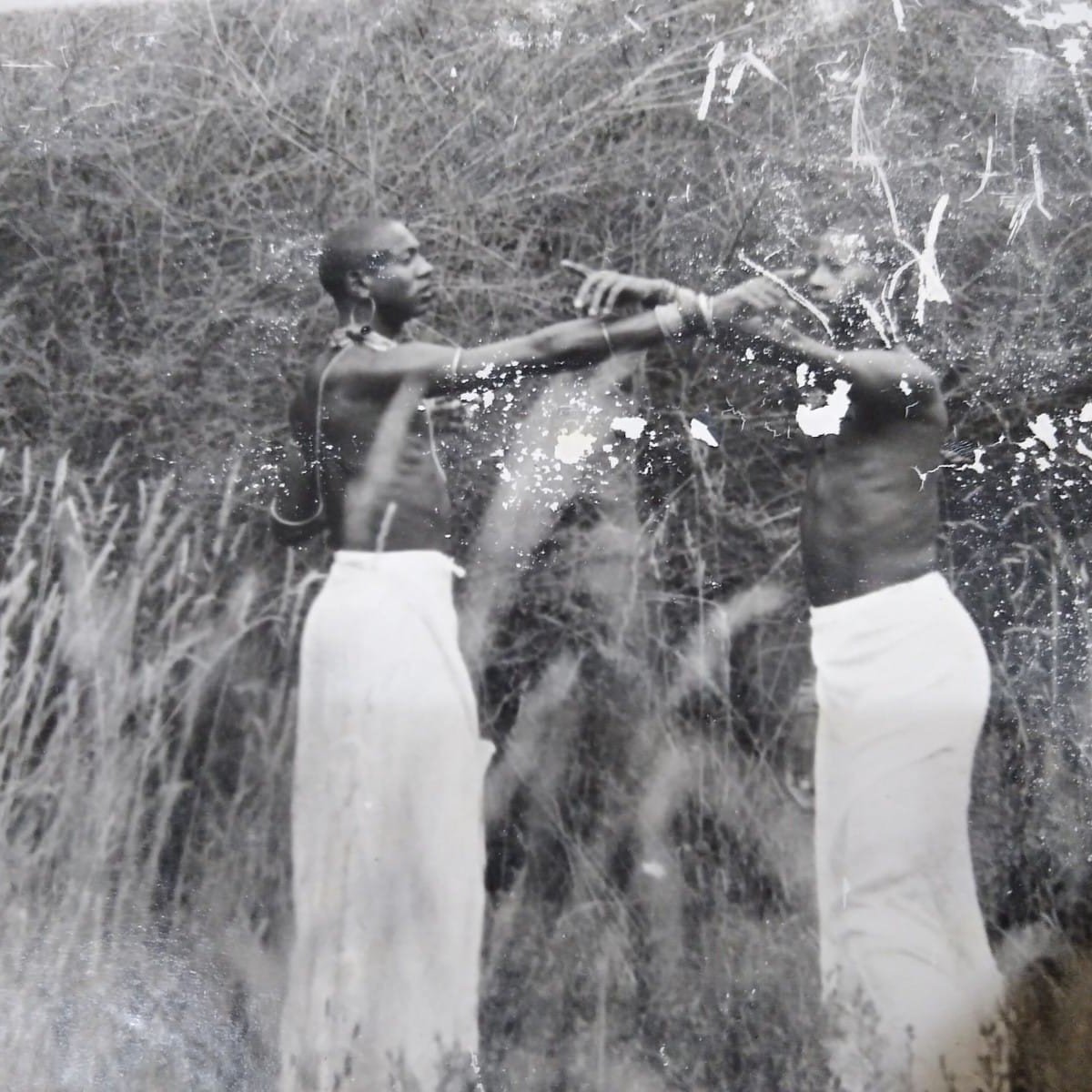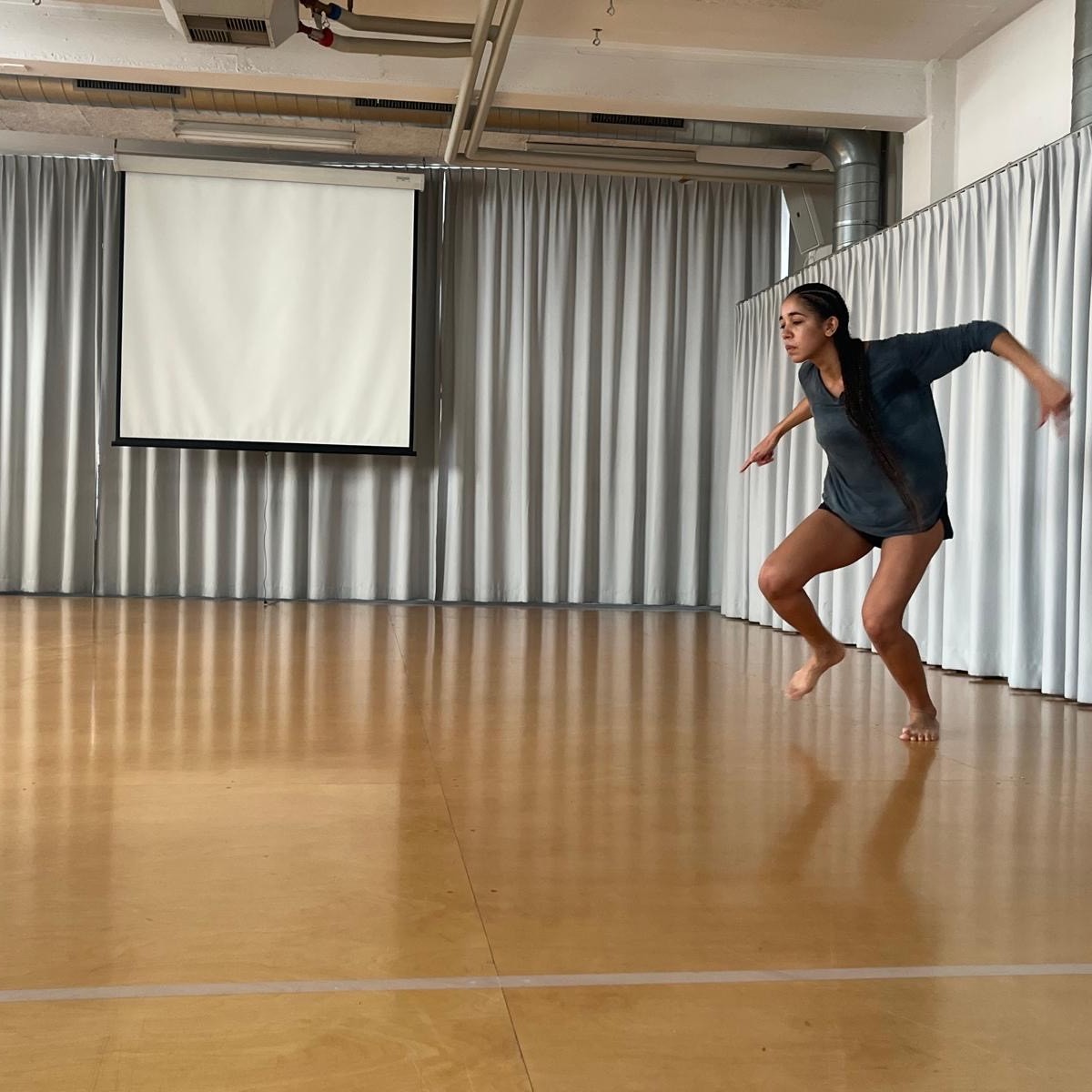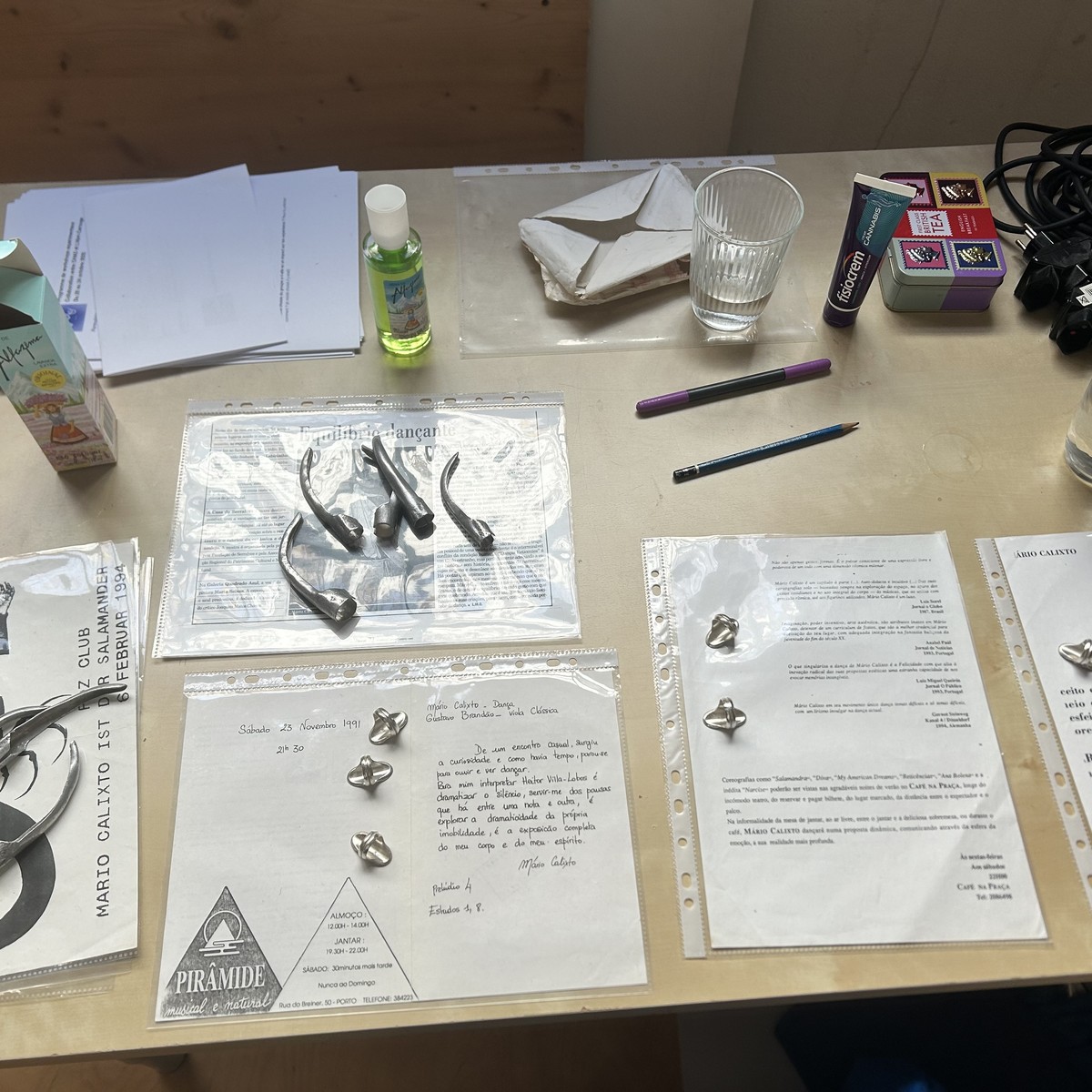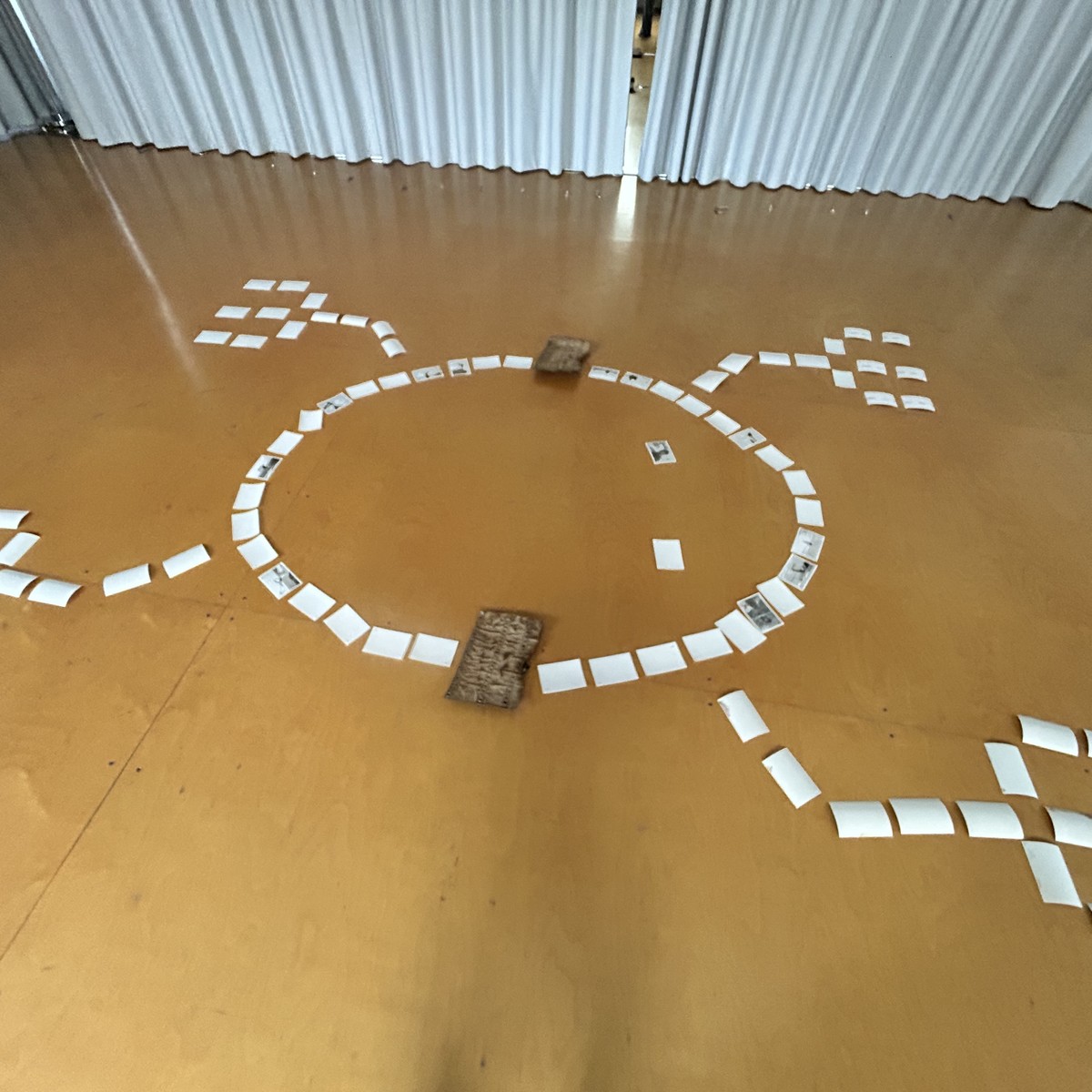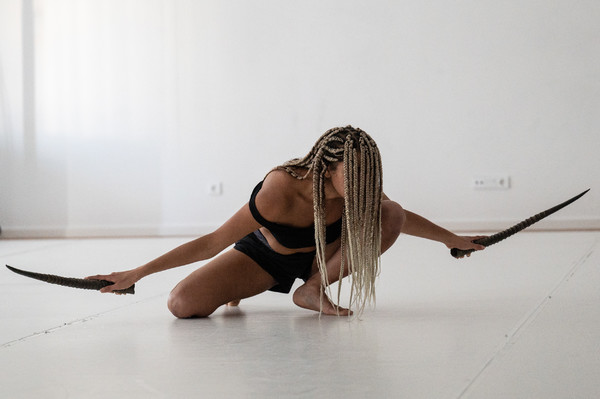
Reverberations is the second creation for the larger project Confluences, by dancer and choreographer Wura Moraes, through which she started entailing a series of artistic experiments based on her relationship, as performer-creator with the life and work of her father, Mário Calixto (1960-1996), and her uncle Miltércio Santos (1961-2924), both choreographers and performers.
The new creation, Reverberations departs from a biographical research, based on Wura’s memories latent to her whole artistic trajectory, being her path intrinsically intertwined with her father and uncle’s artistic pursuit, aware of the importance of preserving their legacy, while revitalizing and activating it to be at disposal of a wider audience.
Autobiographical in nature, this project questions who is responsible for revealing archives that escape official narratives.
Mário Calixto and Miltércio Santos, born in Bahia/Brazil, developed their own approach to dance, starting from self-taught bases they elaborated an increasingly particular language, with intersection of the Butoh technique, in a performative versatility that is markedly contemporary and timeless, with references to their afro-brazilian and indigenous ancestry, in relation to the paradoxes of their reality, as immigrants in Portugal.
With the experience lived during the creation and sharing of HENDA I XALA - Saudade que fica, the first choreographic development of Confluences, carried out in co-production with DDD 2024, Wura calls upon the connection between life, creation and death, spiraling time, ancestry, and questions the concepts of identity, displacement and memory, using the body as the main mean, moved by the challenge of understanding what is so particular that it becomes common and moves us all.
This new creation, in co-production with the DDD 2026 Festival, will develop throughout a series of residencies amongst the partners of the Grand Luxe Network, intending to establish interlocutors throughout the creative process, strengthening interactions and sharing artistic practices.
This work is driven by the responsibility of self-mapping practices that are effective in circumventing the systematic erasure of presences and practices, in an investigation that encompasses a movement to amplify narratives, against the invisibility of artistic paths that have established themselves in European territory, but that remain absent in terms of the history of dance in Portugal, with the strong conviction that generating references saves lives.
Could you introduce yourself?
My name is Wura Moraes. I am a Portuguese-Brazilian dancer and choreographer, and I develop my artistic work between Europe, Africa, and Brazil. I graduated from Faculdade Angel Vianna in Brazil and continued my training through different contexts of research and transmission, notably at École des Sables in Senegal, EDIT in Burkina Faso, and FAICC in Portugal. As a performer, I have had the opportunity to collaborate with artists from very diverse backgrounds, which has deeply shaped my perspective and choreographic language. In parallel, I develop my own creative work as part of a long-term project entitled Confluências, through which I explore the relationships between memory, heritage, and contemporary creation, in dialogue with the archives and artistic trajectories of my father, Mário Calixto, and my uncle, Miltércio Santos, both dancers and choreographers.
Which project are you developing as part of your collaboration with the Grand Luxe network?
As part of my collaboration with the Grand Luxe network, I am developing Reverberations, a creation that unfolds as a continuation and deepening of the project Confluências. This work is grounded in autobiographical and biographical research, drawing from my family and artistic history to question how presences and absences shape who we are. I am particularly interested in the memories inscribed in the body, the dimension of the subconscious, and what remains in motion despite silence or erasure. Reverberations explores the links between life, creation, and death, time understood as spiral, ancestry, and the notion of the archive, while also questioning concepts of identity, displacement, and transmission through the body as a space of knowledge and resistance.
What were your expectations for this residency at L’Abri in Geneva?
For this residency at L’Abri in Geneva, I primarily hoped to have time, space, and favorable working conditions to deepen my studio research and integrate the materials I had been gathering during previous residencies, particularly within the TROIS C-L and Onassis AiR networks. I wanted to slow down, process this accumulated information, and transform it through bodily practice. I also hoped to build connections with the Genevan context, to meet local artists and structures whose practices could resonate with my work, and to nourish the creation through dialogue, observation, and exchange. These expectations were more than fulfilled, both artistically and on a human level.
What particular experiences or impressions did you have during your stay in Geneva?
My time in Geneva was marked by the warmth of the welcome and an exceptional richness of encounters and artistic stimulation. From the very beginning, I had the opportunity to attend performances, open studios, and workshops within festivals such as Emergentia and Creative BPM, which greatly nourished my reflection and imagination. Working in a bright and inspiring studio at L’Abri Carouge was fundamental to the development of Reverberations, particularly thanks to the dramaturgical support of Vânia Gala and the exchanges with other artists-in-residence. Informal conversations, shared moments, the open studio at the end of my stay, and visits to spaces such as Théâtre de l’Usine reinforced my sense of being part of a vibrant, generous, and attentive artistic ecosystem, opening new perspectives for the continuation of the project.
Photo (1) Tiago Rodriguez
Photo (2) et (3) Jose Caldeira